By Sean Moore, Director of Hunters Bingley & Shipley
When you’re comparing estate agents, the fee is an obvious place to start. But it isn’t the whole story.
One agent might quote less than another, and both might promise professional marketing. So what are you actually getting for your money? And what happens after the photographs have been taken and your property appears online?
There’s rather more to it than uploading a few pictures and hoping for the best.
Good property marketing is about presenting your home properly, getting it in front of the right people and giving potential buyers enough information to decide whether it’s worth a closer look. It also involves knowing what matters to buyers in your local area, responding to enquiries and following up once the initial interest starts coming in.
If you’re selling in Bingley or Shipley, here’s what to look for when comparing an estate agent’s marketing service — and the questions worth asking before you instruct.
- Professional property photography: more than a few nice pictures
For most buyers, the first viewing of your home happens on a screen.
Before they book an appointment, they’ll scroll through photographs, compare your property with others and decide whether it deserves a place on their shortlist. Those first impressions matter.
Professional photography should show your home clearly, make the most of the available light and help buyers understand the layout and feel of the space. That doesn’t mean making every room look enormous or pretending a small bedroom could comfortably accommodate a king-size bed, a desk and a wardrobe the size of a wardrobe department.
It means showing the property at its best while keeping the pictures honest.
Preparation helps, too. Clearing surfaces, opening curtains, putting away everyday clutter and making sure rooms are ready to photograph can make a noticeable difference. In some of Bingley’s stone-built terraces and cottages, for example, natural light can be a particularly important feature to make the most of. Thoughtful positioning and careful photography can help show the character of the property without losing sight of the practicalities.
A good agent should also be able to explain what preparation is likely to make the biggest difference in your home, rather than simply arriving with a camera and hoping for the best.
Ask your agent: Are professional photographs included in the fee, who takes them, and how will you help me prepare the property?
- Floorplans: helping buyers picture how they would live there
Photographs show what a property looks like. A floorplan helps buyers understand how it works.
It gives people a clearer idea of the room layout, the relationship between spaces and how the property might suit their needs. Someone looking for a home office, for instance, may want to see whether a second bedroom is separate from the main living space. A growing family might be thinking about bedroom positions, storage and access to the garden.
Floorplans can also help buyers rule a property in or out before arranging a viewing. That is useful for everyone: buyers can make more informed decisions, and sellers are more likely to receive enquiries from people who understand what the property offers.
For older homes, extensions and properties with less conventional layouts, a clear floorplan can be especially helpful. A photograph of a room doesn’t always explain where the stairs lead, how the rooms connect or whether that charming little nook is a useful workspace or somewhere to keep the hoover.
Ask your agent: Is a floorplan included in the marketing package, and will it be available with the online listing?
- Video and 3D walkthroughs: giving buyers another way to explore
Photography and floorplans are important, but some properties benefit from additional ways to show them off.
Video can help communicate the flow of a home, while a 3D walkthrough allows potential buyers to explore the space virtually. These options may be particularly useful for larger properties, homes with distinctive layouts or buyers who cannot easily visit in person.
They are not essential for every property. The right marketing depends on the home, its likely audience and what will help a buyer understand it. A straightforward two-bedroom terrace may not need every available marketing extra, while a larger family home with several reception rooms and an extensive garden might benefit from a more immersive presentation.
At Hunters Bingley & Shipley, marketing options can include professional photography, videography, floorplans and, where appropriate, 3D property walkthroughs. The important thing when comparing agents is to establish which services are included in the package you are being offered and which would cost extra.
Ask your agent: What additional marketing options would genuinely benefit my property, and what would they cost?
- Property portals: getting your home in front of active buyers
A well-presented property needs an audience.
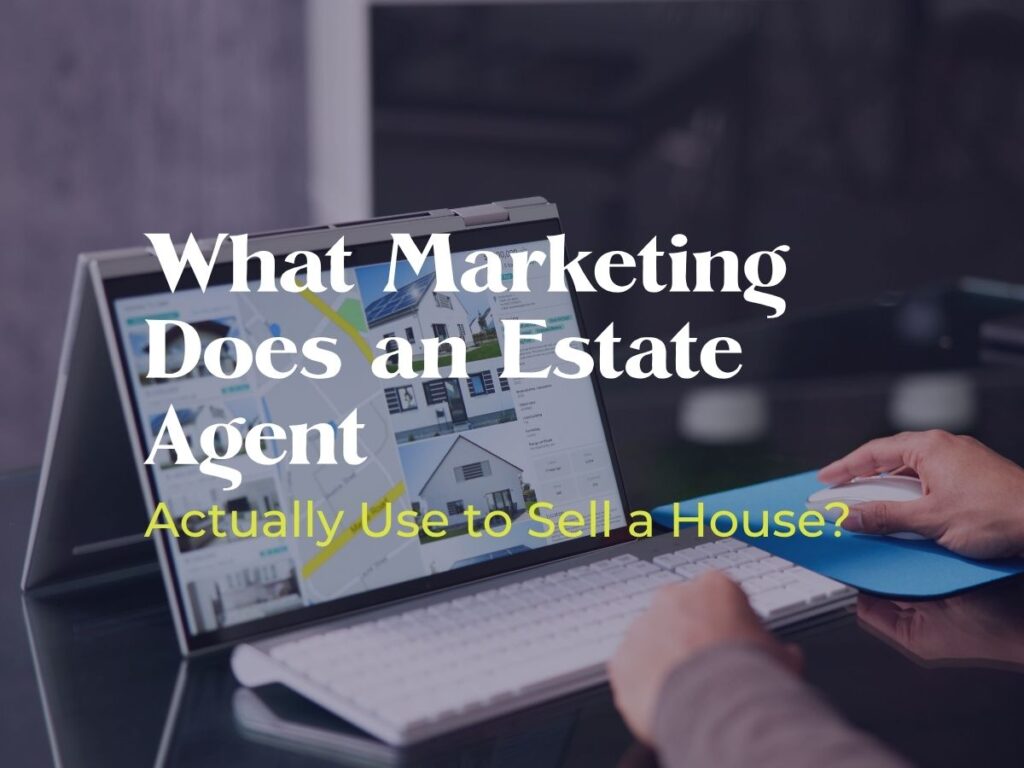
Online property portals such as Rightmove, Zoopla, OnTheMarket and PrimeLocation are important places for buyers to search for homes. They allow people to filter by location, budget, property type and features, then compare the options available.
For sellers, the key questions are which portals your agent uses, what information appears on the listing and how the property will be presented there.
A listing should include an accurate description, useful photographs, a floorplan where available and the information buyers need to decide whether to enquire. It should also make the property’s key features easy to identify.
Getting a property online is an important first step. It isn’t, on its own, a complete marketing strategy. Otherwise, the job would be considerably shorter.
Ask whether your property will appear across the portals relevant to your target audience, whether the advertised marketing package includes any enhanced listing options, and whether there are additional charges for these.
It is also worth remembering that portal exposure is only part of the picture. A listing can attract attention, but what happens when a buyer enquires matters just as much.
Ask your agent: Which portals will my property appear on, and are there any extra charges for enhanced listings or additional exposure?
- The property description: telling buyers what makes your home worth seeing
The written description is often treated as an afterthought. It shouldn’t be.
A good description does more than list the number of bedrooms and bathrooms. It explains what makes the property appealing and helps buyers understand how its features might fit their lives.
That could mean highlighting a dining kitchen suited to family life, a south-facing garden, a useful ground-floor room, period features or convenient access to local amenities and transport links.
Local knowledge helps here. Buyers looking around Bingley and Shipley may have very different priorities depending on their circumstances. Some will be looking for space to grow into; others may want a manageable home close to the station, local shops or familiar places. Someone moving into the area may also need a little more context about the location.
The description should bring out the property’s strengths without exaggerating them. Calling a room “cosy” is sometimes fair enough. Using the word to avoid explaining that it is very small is less helpful.
Accuracy matters, too. If a property has a feature that buyers need to understand — such as an unusual layout, a shared access arrangement or a room with restricted use — the marketing should not leave them guessing.
The aim is to attract interest from people who can see the appeal of the home, not to create expectations that the viewing cannot meet.
Ask your agent: Who writes the property description, and how will you make sure it reflects the features that matter most to buyers?
- Local marketing: why knowledge of Bingley and Shipley matters
A property doesn’t exist in isolation. Its location is part of what you are selling.
Local knowledge helps an agent explain the things that may matter to potential buyers: transport links, local amenities, the character of the neighbourhood and the differences between one part of an area and another.
Bingley and Shipley each have a varied mix of properties and locations. Buyers may be considering everything from traditional terraces and stone-built cottages to larger family homes and modern developments. The priorities of someone searching for a first home may be quite different from those of a family looking for more space or a buyer hoping to be within easy reach of the train station.
An agent who works in the area regularly can use that knowledge to have more useful conversations with buyers. They can also draw on their understanding of the local market when advising on how to position a property and which features deserve particular attention.
That doesn’t mean making sweeping promises about what every buyer wants. It means understanding the local context and using it to market each property on its own merits.
Social media can support this work, too. A property might be featured on an agent’s Facebook or Instagram channels, alongside content that helps local people discover it. This can be particularly useful when a home has a distinctive feature, a strong visual appeal or a story that is worth sharing.
Social media should complement the main property listing rather than replace it. The objective is to reach more relevant people and encourage them to find out more.
Ask your agent: How will you use your knowledge of the local market to promote my property, beyond simply listing it online?
- For-sale boards, registered buyers and local enquiries
Not every buyer discovers a property in the same way.
Some will be searching the portals every day. Others may already be registered with an agent and waiting for a suitable home to become available. Some may notice a for-sale board while walking or driving through an area they want to live in.
A board can help raise awareness locally, while an agent’s existing database may provide another route to potential buyers. The value of that database depends on how well it is maintained and whether the people registered are looking for properties like yours.
This is where the work behind the scenes matters. An agent should be considering who might be a suitable match, contacting relevant registered buyers where appropriate and responding to enquiries as they come in.
For a seller, it is worth understanding whether the agent plans to contact potentially suitable buyers before or when the property launches, and how they will keep you informed about the response.
At Hunters Bingley, marketing options can include QR codes on property boards, making it easier for people passing by to find the online listing. The exact options available will depend on the marketing package agreed.
Ask your agent: Do you have registered buyers who may be interested in my property, and how will you let them know it is available?
- Pricing and marketing need to work together
Even excellent photography and broad online exposure cannot compensate for a property being positioned at a price that buyers do not consider realistic.
Setting an asking price involves more than looking at what a similar property is currently advertised for. Asking prices tell you what sellers hope to achieve, not necessarily what buyers will ultimately pay.
It is worth understanding the different types of market data available. Rightmove’s House Price Index focuses on asking prices for properties coming to market, while Zoopla’s House Price Index tracks achieved sale prices using its own methodology. The official UK House Price Index, published by HM Land Registry and its partners, provides another important source of sold-price information.
Each source offers a different perspective, and none should be treated as a precise valuation of an individual home.
For a property in Bingley or Shipley, an agent should also consider relevant local evidence, the property’s condition, its features, current competition and the level of buyer interest. Two homes with the same number of bedrooms can appeal to different buyers and perform differently in the market.
Marketing and pricing should therefore be considered together. The asking price helps determine which buyers see the property in their searches, while the quality of the listing helps those buyers decide whether to enquire.
Your agent should explain the reasoning behind their recommendation and discuss how they will review the response once the property launches. If the initial interest is lower than expected, that conversation should be based on evidence rather than guesswork.
Ask your agent: What evidence supports your suggested asking price, and how will you assess the response after launch?
- What happens after the property goes live?
This is an important part of the service that can be easy to overlook when comparing marketing packages.
Once your property is online, your agent should be monitoring enquiries, arranging viewings, gathering feedback and keeping you informed. They should also be available to answer questions from potential buyers and help you understand what the response means.
If several people enquire but few arrange a viewing, that may tell you something different from a property receiving plenty of viewings but little interest in making an offer. Feedback can help identify questions or concerns that may need addressing.
There is no single response pattern that guarantees a sale. The point is that your agent should be paying attention to what is happening and talking you through it.
When offers arrive, the service moves beyond marketing alone. Your agent should explain the offers received, discuss the buyers’ circumstances and help you assess the position before deciding how to proceed. A higher offer is not automatically the strongest offer if the buyer’s finances or onward plans are uncertain.
If you accept an offer, communication remains important as the sale progresses. Your agent should keep in touch with the buyer and seller, liaise with the relevant parties and help identify issues that could delay progress.
The legal transfer is handled by the conveyancers, but an estate agent can play a useful role in keeping communication moving. The government’s guidance on choosing an estate agent also explains what sellers should check in their contract, including the fee and what is included.
In other words, marketing should not end with the upload. The service around the listing matters, too.
Ask your agent: How often will you update me, how will you share viewing feedback, and who will be my main point of contact?
- What should landlords look for in property marketing?
If you are letting a property rather than selling it, many of the same principles apply.
Clear photography, an accurate description and a well-presented listing help prospective tenants decide whether a property could suit them. The advert should communicate the practical details as well as the appealing features, so applicants can make an informed decision before arranging a viewing.
But the aim is different. A sales campaign is intended to attract suitable buyers and support a successful sale. A letting campaign is about finding an appropriate tenant, with the process and ongoing responsibilities depending on the service you choose.
For landlords, it is worth asking how the agent will advertise the property, respond to enquiries, arrange viewings and handle applications. If you are considering a fully managed service, you should also understand what happens after a tenant moves in and which responsibilities the agent will take on.
Hunters Bingley & Shipley offer flexible lettings services, from tenant-find support through to rent collection and fully managed options. The right choice depends on your circumstances and how involved you want to be in the day-to-day work.
As with sales, ask for a clear explanation of what is included in the fee and which services may incur additional charges.
- How to compare estate agent marketing packages
When you are comparing agents, it is tempting to focus on the number of photographs, the list of portals or whether video is included. Those details matter, but they do not tell you everything about the service.
Use these questions to help you compare like with like:
- Photography: Are professional photographs included, and will the agent advise you on preparing your home?
- Floorplans and video: What is included as standard, and which additional options would be useful for your property?
- Online exposure: Which portals will carry the listing, and are there extra costs for enhanced advertising?
- Description: Who writes the advert, and how will they highlight the features that matter to likely buyers or tenants?
- Local marketing: How will the agent use local knowledge, social media, boards and registered applicants or buyers?
- Pricing advice: What evidence supports the recommended asking price, and how will the agent review the response?
- Communication: Who will manage enquiries, arrange viewings and keep you informed?
- After the offer: What support will you receive as the sale or letting progresses?
- Fees and terms: Exactly what is included in the fee, what costs extra, and what are the terms of the contract?
The answers should give you a clearer picture of what you are paying for than a headline fee or a list of marketing features alone.
So, what marketing does an estate agent actually use to sell a house?
A good marketing plan brings several elements together: professional presentation, clear and accurate information, exposure on relevant property portals, local promotion and a sensible approach to pricing. It is then supported by the work of responding to enquiries, arranging viewings, gathering feedback and helping the sale progress.
Not every property needs every marketing option. What matters is that the approach suits the home, reaches the right audience and is backed up by a service that keeps you informed.
At Hunters Bingley & Shipley, we believe sellers and landlords should understand what they are paying for and why it matters. Our marketing options can include professional photography, videography, floorplans and 3D walkthroughs, depending on the package selected. We combine those tools with local knowledge and our commitment to award winning customer service.
If you are thinking about selling or letting in Bingley, Shipley or the surrounding areas, we would be happy to talk you through the options, explain what we recommend for your property and answer your questions about fees.
No hard sell. Just a straightforward conversation about what your property needs.
Contact Hunters Bingley
Telephone: 01274 511509
Email: [email protected]
Contact Hunters Shipley
Telephone: 01274 594040
Email: [email protected]
About Sean Moore
Sean Moore is Director of Hunters Bingley & Shipley. Working across both branches, Sean and the team help local sellers, buyers, landlords and tenants navigate the property market with practical advice, local knowledge and a personal approach.
Further reading