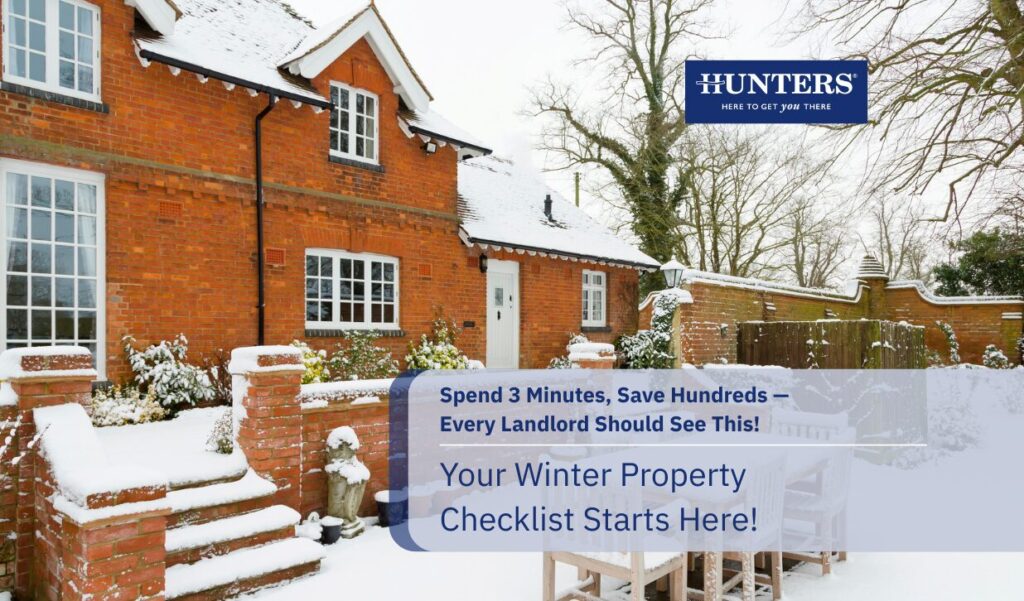
Winter in the UK is a season that truly tests how well a property has been maintained. For landlords, it is also the perfect opportunity to protect their investment, improve energy efficiency, and reassure tenants that their homes are safe and comfortable. A few simple checks carried out before temperatures drop can prevent costly emergencies and keep properties running smoothly throughout the colder months.
At Hunters, we know from experience that the landlords who plan not only save money but also build stronger relationships with their tenants. This guide sets out the essential steps for getting your rental property winter-ready, with practical advice you can act on straight away.
Related: Landlord compliance checklist: what’s changed in 2025?
Make heating systems a priority
Reliable heating is at the heart of a warm and comfortable home. Arrange a boiler service in autumn with a Gas Safe-registered engineer to ensure the system is efficient and compliant with safety regulations. Bleeding radiators to remove trapped air and checking thermostats for accuracy further improve performance.
More landlords are now installing smart thermostats, which give tenants greater control over their energy use while providing early warnings of potential faults. Small steps like these make properties more attractive to tenants and reduce the risk of disruptive breakdowns in midwinter.
Protect your plumbing from the cold
Frozen pipes are one of the most common winter issues. Insulating exposed pipes in lofts, garages, or external walls with affordable lagging is a simple but effective safeguard.
Tenants should also be shown the location of the stopcock. If a pipe does burst, being able to switch off the water immediately can prevent extensive damage. Encourage tenants to keep background heating on at a low level, even when away from the property, as consistent warmth is the best defence against frozen pipes.
Strengthen your property from the outside in
The exterior of a property is its first line of defence against winter weather. Arrange a roof inspection to check for missing tiles or damaged flashing, and clear gutters and downpipes of autumn leaves to avoid blockages. When debris freezes, it often pushes water back into walls, leading to dampness.
It is also important to check that ground drainage is functioning properly. Standing water near foundations or basements can cause long-term problems if ignored. Taking time to review these areas now is far easier than dealing with the consequences of a major leak later.
Keep damp and mould under control
Damp and mould are more than just cosmetic problems; they can affect tenant health and lead to disputes. Check that extractor fans in kitchens and bathrooms are working efficiently, and seal any cracks around windows or walls where water could enter.
Communication with tenants is also vital. Provide simple winter guidance to encourage consistent heating, daily ventilation, and early reporting of damp patches. Under the Homes Act 2018, landlords are responsible if damp or mould arises from structural or ventilation issues, so addressing these risks early is essential.
Related: Does my house need to be damp-proofed?
Review legal and safety responsibilities
Winter is the right time to make sure your property is fully compliant. Landlords are required to renew their Gas Safety Certificate every year and to obtain an Electrical Installation Condition Report (EICR) at least every five years.
Smoke alarms must be fitted on every floor of the property, while carbon monoxide detectors are legally required near solid-fuel appliances and strongly advised near gas boilers. Testing these devices before winter provides reassurance to both landlords and tenants.
Focus on energy efficiency
With energy bills high on tenants’ minds, improvements that reduce heat loss are more valuable than ever. Simple steps such as sealing draughts around doors and windows, topping up loft insulation, and upgrading single glazing to double or triple glazing can significantly improve comfort and lower running costs.
Better insulation and glazing also improve EPC ratings, making properties more attractive in the long term. By investing in energy efficiency now, landlords can stay ahead of evolving government standards while keeping tenants satisfied.
Related: What landlords need to know about EPC for rental properties
Communicate and plan ahead
Good communication is one of the simplest but most effective tools for reducing winter risks. Provide tenants with a short winter guide that covers heating, ventilation, and who to contact in case of problems. Make sure emergency contacts are clearly listed and that tenants feel confident reporting issues early.
Landlords can also benefit from planning. Reviewing insurance cover, building relationships with reliable contractors, and setting clear response times for emergencies all help reduce stress when the unexpected occurs.
FAQs for landlords preparing for winter
Q1. What should a landlord’s winter property checklist include?
It should cover boiler servicing, pipe protection, roof and gutter checks, damp prevention, safety obligations, insulation upgrades, tenant communication, and emergency planning.
Q2. How often should boilers be serviced?
At least once a year, ideally in autumn before winter demand peaks.
Q3. How can landlords prevent frozen pipes?
Insulate exposed pipes, encourage background heating, repair leaks promptly, and ensure tenants know how to turn off the water supply.
Q4. Who is responsible for damp and mould?
If damp is caused by structural or ventilation issues, landlords are responsible. Tenants are expected to manage everyday condensation responsibly.
Q5. What safety checks should landlords carry out each winter?
Smoke alarms, carbon monoxide detectors, gas safety certificates, and electrical reports should all be up to date.
Q6. What makes the best winter maintenance checklist?
The best checklist is proactive, covering both property maintenance and tenant communication to prevent small issues from becoming major problems.
Prepare to Prevent
Winter is a season that rewards preparation. By taking time to service heating systems, insulate properties, check safety compliance, and communicate clearly with tenants, landlords can enjoy peace of mind while protecting their investment.
At Hunters, we help landlords across the UK take a proactive approach to property management. If you would like support in preparing your property for winter, contact your local Hunters branch today.