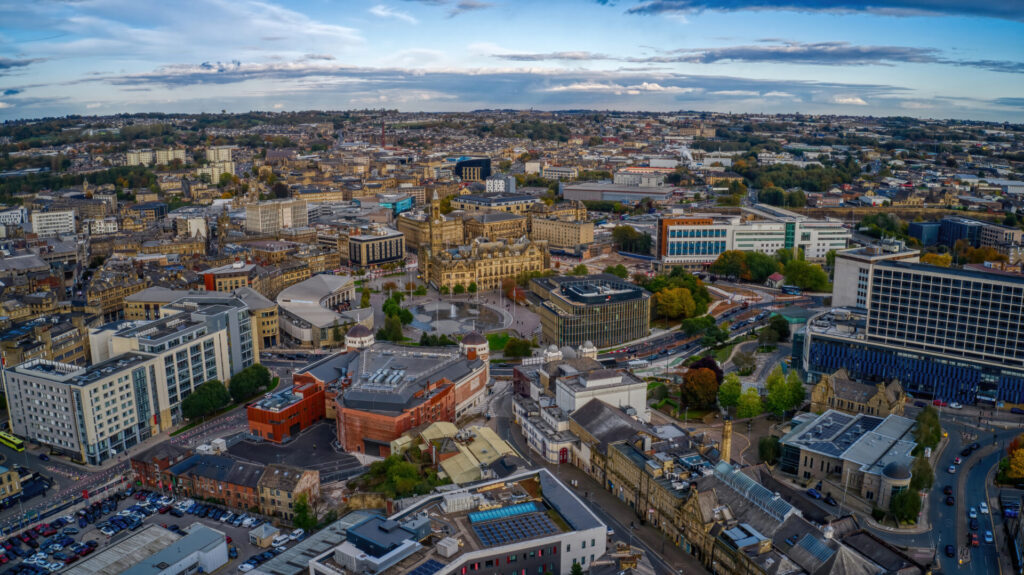
Picture this. You’re standing at City Park, watching the mirror pool reflect Bradford’s skyline. Behind you, the Tyrls and Hall Ings areas are about to transform into a thriving residential neighbourhood. The Bradford City Village development, approved in December 2024, brings 1,000 new homes and £300 million of investment right into the heart of BD1. This isn’t just another development. It’s a complete shift in how you can live, invest and build your future in Bradford city centre.
Let’s explore exactly what this means for your property plans.
What Bradford City Village brings to BD1
The Bradford City Village project spans the Tyrls and Hall Ings areas, two sites that sit within walking distance of Bradford Interchange and Forster Square. You’ll find these locations nestled between the city’s cultural quarter and its commercial heart, placing future residents minutes from the National Science and Media Museum, Bradford Cathedral and the Alhambra Theatre.
The development delivers 1,000 homes across a mix of apartments and townhouses. You’ll see one-bedroom apartments perfect for first-time buyers, two-bedroom units ideal for young professionals or couples, and larger three-bedroom homes suited to growing families. The £300 million investment also includes ground-floor retail spaces, communal gardens and improved pedestrian routes connecting directly to City Park.
December 2024 marked the formal approval, with construction expected to begin in late 2025. The first phase focuses on the Tyrls site, with completion projected for 2027. Hall Ings follows in phase two, extending the development through to 2029.
How this changes property values in BD1
Bradford City Village is projected to increase BD1 property values by 10 to 15 percent over the next three to five years. Here’s why.
Supply and demand dynamics
The development adds 1,000 homes to an area where rental demand already outstrips supply. Bradford’s student population exceeds 30,000 across the University of Bradford and Bradford College, yet purpose-built city centre accommodation remains limited. Young professionals working at businesses along the Leeds-Bradford corridor also struggle to find quality rental options in BD1.
When you increase the quality of available housing stock, you lift the entire area’s perception. Properties near Bradford City Village, including existing apartments along Vicar Lane and Canal Road, stand to benefit from this uplift effect.
Infrastructure improvements
The development comes with enhanced pedestrian routes, better lighting and landscaped public spaces. These improvements extend beyond the immediate site, connecting the Tyrls and Hall Ings areas more effectively to Forster Square and the city’s retail core.
You’ll also see improved cycling infrastructure as part of Bradford Council’s wider city centre mobility plan. When transport links improve, property values follow.
Opportunities for first-time buyers
If you’re looking to get on the property ladder, Bradford City Village opens doors that seemed closed in other Yorkshire cities.
Affordability compared to Leeds and Manchester
A two-bedroom apartment in Leeds city centre costs around £235,000 on average. In Manchester, you’re looking at £280,000 or more. Bradford City Village properties are expected to launch from £165,000 for a one-bedroom apartment and £195,000 for a two-bedroom unit. That’s a deposit difference of £14,000 to £17,000 assuming a 20 percent down payment.
Your mortgage payments become more manageable. Your commute to Leeds takes 20 minutes by rail from Forster Square. You get city centre living without the city centre price tag.
Help to buy and shared ownership
The developers are working with Bradford Council to include affordable housing options within the scheme. You might access shared ownership opportunities, where you buy a percentage of the property and pay rent on the remainder. This reduces your initial deposit requirement and makes city centre living achievable on a broader range of incomes.
What property investors need to know
Bradford’s rental market shows consistent strength. Average rental yields in BD1 sit at 6.2 percent, compared to 4.8 percent in Leeds city centre and 4.3 percent in Manchester, according to data from the Yorkshire Building Society.
Rental demand drivers
The University of Bradford sits less than a mile from Bradford City Village. Students want quality accommodation within walking distance of campus, and they’re willing to pay for it. Two-bedroom apartments in BD1 currently rent for £850 to £950 per calendar month, with demand consistently high throughout the academic year.
Young professionals working in Bradford’s growing digital and creative sectors also seek city centre rentals. The National Science and Media Museum anchors a cultural quarter that continues to attract businesses and employment opportunities.
Capital growth projections
The 10 to 15 percent value increase projected over the next three to five years translates to real numbers. If you buy a two-bedroom apartment at £195,000 in 2026, a 12 percent increase by 2029 takes the value to £218,400. That’s £23,400 in capital growth, plus rental income throughout the holding period.
These projections assume Bradford continues its current regeneration trajectory. The city centre has already seen major investment through the £24 million City Village project and ongoing improvements to Bradford Interchange.
Existing BD1 properties benefit too
You don’t need to buy in Bradford City Village to benefit from its impact. Properties already in BD1, particularly those within a 10-minute walk of the development sites, should see value increases as the area’s reputation improves.
Which areas see the biggest impact
Little Germany, Bradford’s historic warehouse district, sits adjacent to the Tyrls site. The Victorian architecture and ongoing conversion of commercial buildings into residential lofts already attract buyers seeking character properties. Bradford City Village brings additional footfall and amenities that enhance Little Germany’s appeal.
The area around Forster Square, including apartments along Cheapside and Manor Row, also benefits. Better pedestrian connections and increased residential density support local businesses, creating a more vibrant neighbourhood.
Timing your property decision
Construction begins in late 2025, with first completions in 2027. If you’re considering buying in BD1, here’s how to time your decision.
Buy now if you want to secure property at current prices before the development impact fully materialises. Existing apartments and houses in Little Germany, around City Park or near Forster Square offer immediate value with future growth potential.
Buy off-plan in Bradford City Village if you want a brand new home with modern specifications and you’re comfortable waiting until 2027 for completion. Off-plan purchases often come with incentives like stamp duty contributions or upgraded fixtures.
Wait and assess if you prefer to see the development take shape before committing. You’ll pay higher prices, but you’ll have certainty about the finished product and its impact on the surrounding area.
Your next steps
Bradford City Village represents the most substantial residential investment in BD1 for over two decades. The £300 million project changes what’s possible for first-time buyers seeking city centre living and investors targeting strong rental yields with capital growth potential.
The BD1 property market offers value that’s increasingly rare in Yorkshire’s urban centres. With projected price increases of 10 to 15 per cent over the next three to five years, now is the time to explore your options.
Book a free valuation if you’re considering selling your current property to move into BD1. Hunters Bradford knows the local market inside out, from Little Germany’s converted warehouses to the newest developments transforming the city centre. Let’s work together to find your next home or investment opportunity in Bradford’s evolving property landscape.